Gallery



Liszt in the Cathedral
Liszt in the Cathedral turns its focus to the sacred music of Franz Liszt and to one of the deepest dimensions of his artistic legacy. The festival’s closing concert returns to St. Martin’s Cathedral, the former coronation church of the Kingdom of Hungary and one of Bratislava’s most significant historic landmarks, a place with which Liszt himself was closely associated. His works were performed here on numerous occasions, and in 1884 he personally conducted his Hungarian Coronation Mass in this very cathedral.
Within this remarkable setting, compositions for organ and male voices reveal the intersection of personal faith, liturgical tradition, and Romantic expressiveness, reflecting Liszt’s unique search for a profound spiritual musical language. The programme progresses from the intimate sacred works Ave Maria, Pater Noster, and the psalm De profundis to the monumental Requiem, bringing the inaugural edition of the festival to a powerful conclusion.
Programme
- Franz Liszt: Ave Maria for Organ
- Franz Liszt: Pater noster for Male Choir and Organ
- Franz Liszt: Psalm 129 “De profundis” for Baritone, Male Choir and Organ
- Franz Liszt: Requiem
Prices of tickets
Performers
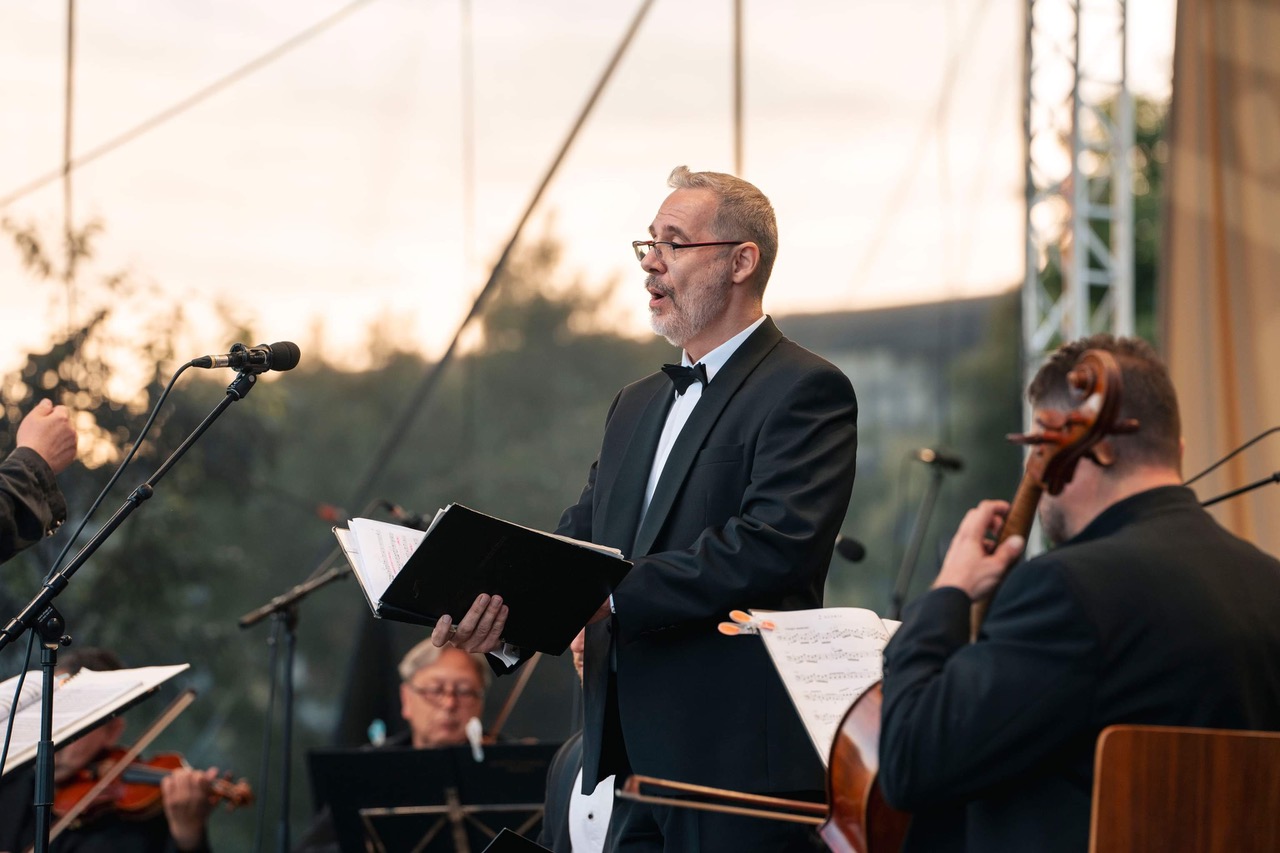
Adam Sedlický
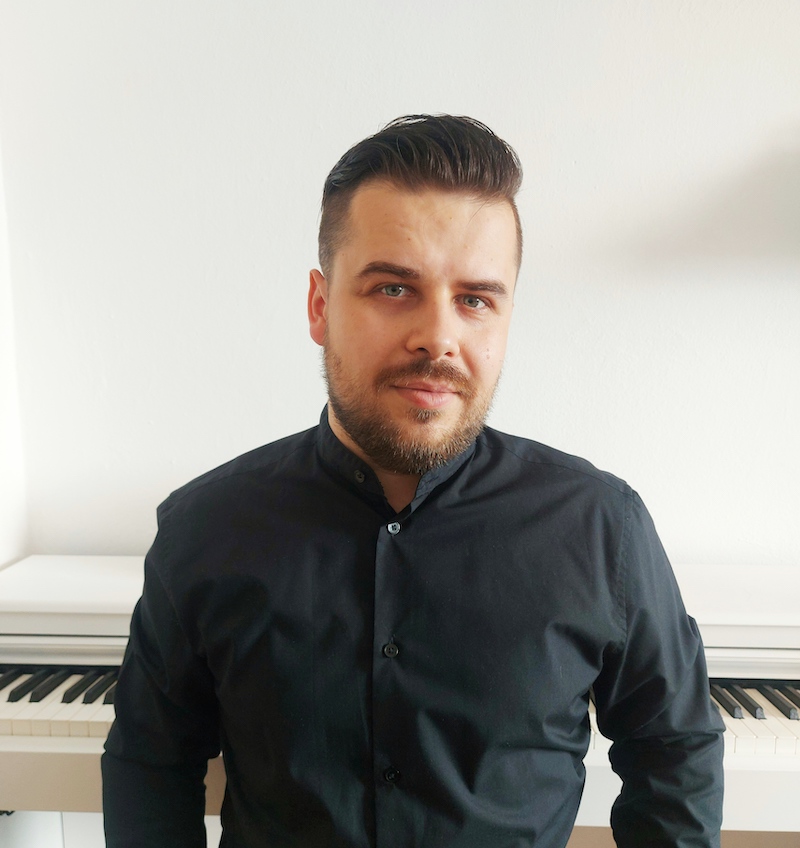
Slovak conductor Adam Sedlický (1991), winner of the 3rd Prize at the Zoraqi Conducting Competition in Albania (2025), graduated in piano performance (D. Švárna) and conducting (Š. Sedlický) from the Conservatory in Žilina. In 2016, he completed his Master’s degree in orchestral conducting (J. Kyzlink) at the Academy of Performing Arts in Bratislava.
He also completed a semester of study at the Academy of Music in Kraków and participated in masterclasses with Gabriel Chmura, Colin Metters and Michalis Economou, during which he conducted the Beethoven Academy Orchestra, Cardiff Sinfonietta and Athens Philharmonia Orchestra.
In 2021, he was awarded a scholarship by the Bayreuth Festival (Bayreuther Festspiele) and completed his doctoral studies at the Academy of Arts in Banská Bystrica, where he currently serves as an Assistant Professor.
In 2014, he began collaborating with the National Moravian-Silesian Theatre in Ostrava. Between 2017 and 2023, he served as a conductor of its opera company, leading productions including Nabucco, La Traviata (Verdi), Tosca, Il Trittico (Puccini), Rusalka (Dvořák), Fate (Osud, Janáček), The Kiss (Hubička, Smetana), Tannhäuser (Wagner), Swan Lake, The Nutcracker (Tchaikovsky), The Tempest (Fibich), The Rape of Lucretia (Britten), Don Quixote (Minkus), Robert le Diable (Meyerbeer), and many others.
Following his successful debut at the Slovak National Theatre in 2022, he has become a regular guest conductor there. His repertoire includes Nabucco (Verdi), Carmen (Bizet), Svätopluk (Suchoň), Hansel and Gretel (Humperdinck), Swan Lake, The Nutcracker (Tchaikovsky), among others. During the 2025/2026 season, he made his debut at the State Opera in Banská Bystrica, conducting Giordano’s Andrea Chénier.
He has collaborated with the Slovak Radio Symphony Orchestra, where he served as Principal Conductor from 2020 to 2023, as well as with the Brno Philharmonic, Bohuslav Martinů Philharmonic Zlín, Janáček Philharmonic Ostrava, Košice State Philharmonic, Moravian Philharmonic Olomouc, and many other ensembles. Since 2022, he has been Principal Guest Conductor of the Slovak Sinfonietta Žilina.
In 2024, he conducted a tour at Theater Bonn with the ballet company of the National Moravian-Silesian Theatre and the North Bohemian Philharmonic Orchestra, presenting Tchaikovsky’s The Nutcracker.
As a choirmaster, he led the Academic Choir of VSB – Technical University of Ostrava from 2015 to 2023, winning numerous international awards with the ensemble.
Among Sedlický’s honours are the Choirmaster Junior Award (Czech Republic, 2018) and reaching the finals of the Romano Gandolfi International Competition for Choral Conductors in Parma, Italy (2019). Since 2020, he has also regularly collaborated as a guest choirmaster with the Slovak Philharmonic Choir.
Juraj Kuchar
Juraj Kuchar studied opera singing at the Conservatory in Bratislava. He began his musical journey at the age of six as a member of the Bratislava Boys’ Choir, where he first performed as a soprano soloist and later as a tenor soloist.
He is the recipient of numerous international awards, including Second Prize in the Song Category at the Antonín Dvořák International Singing Competition in Karlovy Vary and the Gustav Mahler Prize. He has also been a laureate of the Nitrianska Lutna Competition and the Peter Dvorský Competition in Košice, and received the Director’s Prize of the Slovak National Theatre at the Prix Shimizu competition. In recognition of his artistic achievements, he was also awarded the Honorary Prize of the City of Bratislava.
His artistic focus encompasses opera, art song and concert repertoire. He has collaborated with leading orchestras including the Orchestra of the Slovak National Theatre, the Slovak Philharmonic, the State Philharmonic Košice, the Žilina State Chamber Orchestra, Cappella Istropolitana and the ensemble Solamente Naturali. As a member and soloist of the vocal ensemble SoLa, he is also devoted to early music.
His concert repertoire includes the Evangelist in Bach’s passions, Handel’s Messiah, Haydn’s The Creation and The Seasons, Mendelssohn’s Elijah, and Mozart’s Requiem.
He has appeared both in Slovakia and abroad as Don Ottavio in Don Giovanni, including performances at the Oper-rund-um Festival in Waidhofen an der Ybbs, as well as productions in Salzburg and Klagenfurt. At the Slovak National Theatre he has performed the roles of Pedrillo (The Abduction from the Seraglio), Jeník (children’s version of The Bartered Bride) and Gastone (La Traviata).
From 2014 to 2017 he was a member of the Vienna State Opera Choral Academy. Since November 2021 he has been a permanent member of the chorus of the Vienna State Opera, where he also performs smaller solo roles. Since 2022 he has also been a member and soloist of the Vienna Hofmusikkapelle.
Ondřej Benek
Ondřej Benek is a Czech tenor studying classical singing at the Hochschule für Musik Hanns Eisler in Berlin in the class of Simon Bode. He graduated from the Prague Conservatory, where he studied classical singing with Jiří Kotouč and conducting with Miriam Němcová and Jakub Zicha.
As an opera and concert soloist, he performs repertoire ranging from the Baroque period, with a particular focus on historically informed performance, to contemporary classical music and musical theatre. He regularly collaborates with ensembles including Collegium 1704, Czech Ensemble Baroque, Ensemble Damian, Musica Florea and Schola Gregoriana Pragensis. He appears as a guest artist at the J. K. Tyl Theatre in Plzeň, where he performed the title role in Mozart’s opera La clemenza di Tito. In the 2026/2027 season, he will prepare the role of Paolino in Cimarosa’s opera Il matrimonio segreto. He has also collaborated with the North Czech Philharmonic Teplice, the South Bohemian Theatre and the Gustav Mahler Philharmonic Orchestra Jihlava.
He is a laureate of the Antonín Dvořák International Singing Competition in Karlovy Vary. He has worked with conductors Carl Davis, Michael Hofstetter and Tobias Walenciak, and has further developed his interpretative skills in masterclasses led by Bernarda Fink as part of the prestigious Encuentro de Música y Academia de Santander, as well as with Gabriela Beňačková, Magdalena Hajóssyová and Vladimír Chmelo.
Peter Kollár
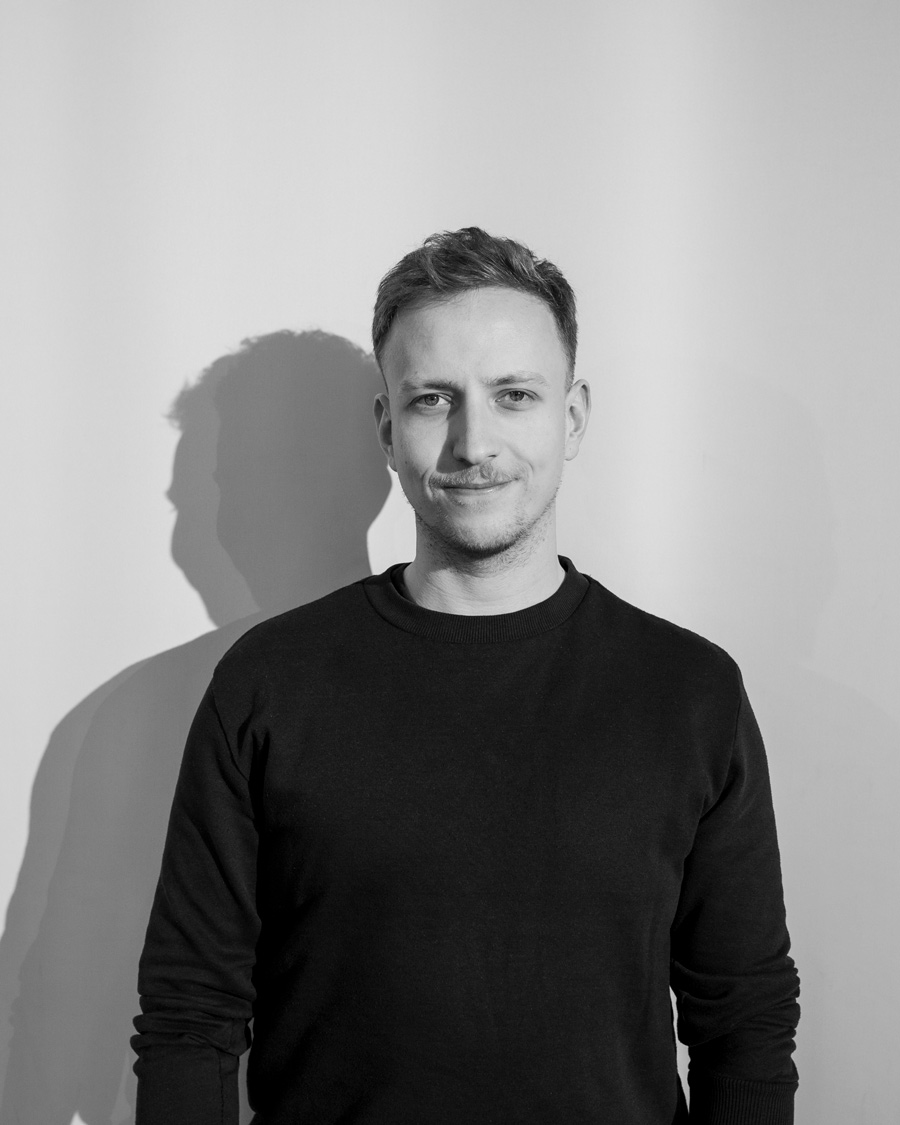
Peter Kollár is a man whose entire life has been closely connected with music. He is currently in his 30th season as a member of the bass section of the Slovak Philharmonic Choir and has contributed lyrics to dozens of musical projects for Robo Opatovský, Martina Schindlerová, Anita Soul and many others.
How it all began:
I do not know whether I ever thought about what I wanted to become as a child, but from an early age I was very talkative and naturally drawn to music. For a while, I also flirted with acting and attended an audition for a children’s theatre – and it turned into one big embarrassment.
I was the last one to be called. By then, I had neither the energy nor the courage left, and when they told me what I was supposed to do, it seemed extremely uninteresting. I performed the exercise very quickly, but everyone encouraged me to continue and to laugh. At that moment, however, I found nothing funny except the man who was showing me how I should laugh. He had no teeth.
I did not succeed there in the end, but I joined a children’s radio choir, where one day I was noticed by Mr Bázlik and Mr Obžera. At the time, they were recording the fairy tale Three Times Three Is Nine, in which I sang the role of a boy who could not do multiplication.
Those were my beginnings. Later, I became a member of the Slovak Philharmonic Boys’ Choir under the direction of Magdaléna Rovňáková. It did not last very long because my voice began to change quite early. I later returned as a substitute bass singer and also as a vocal coach.
My story:
Music has accompanied me since early childhood. I was strongly supported in this respect by both my parents and grandparents, even though they were not directly involved in music. The exception was my maternal grandfather, who was an architect but also had a band and played the violin. I therefore assume that a ray of musical sunlight came from that branch of the family.
After primary school, the conservatory was the obvious choice for me. I began studying with Professor Malachovský and later continued with Marta Beňačková and Miloslava Sopirová, a recipient of the Thalia Award for her lifetime contribution to opera.
The years of professional development:
After graduating from the conservatory, I was not accepted to the Academy of Performing Arts in Bratislava. I did, however, join the Vienna Chamber Opera as a second tenor, which is not actually my voice type.
Eventually, I found my place as a first bass in the Slovak Philharmonic Choir, where I am now in my 30th season. It has been a wonderful time. In addition, I am involved in various other projects connected with music.
My greatest achievement:
The cantata Under My Spell holds a special place in my life. It was written for solo soprano, performed by Adriana Kučerová, symphony orchestra and women’s choir. The music was composed by Oskar Rózsa, while Matej Drlička managed the entire project.
Recording it with the full orchestra in the studio in 2009 was an extraordinary experience. It was fascinating to observe all the people involved in bringing the project to life.
Under My Spell later became the opening concert of Viva Musica! and was subsequently performed in Prague, Budapest and Vienna. I believe that if anything remains after me, it will be this work.
Paradoxically, the music Oskar and I created together is heard by the greatest number of people at Slovan Bratislava’s stadium, for which we created a club anthem by transforming the traditional song Na Kráľovej holi into Na Tehelnom poli.
Writing lyrics:
The process of writing lyrics varies. I need the right moment when I can sit down, begin singing to myself and gradually allow the words to emerge.
Sometimes the lyrics are created independently. This is often the case in my collaboration with Ľubica Čekovská, who has the gift of hearing a melody in particular verses, phrases or words, and the music is then created on the basis of the text.
It also works the other way around, when I already know the music, or sometimes only its harmony or general character, and create the lyrics to fit it. The most difficult part is always finding a subject that is not completely banal – although an apparent banality can often develop into something interesting and gain meaning when combined with the depth of the music.
I have always been fascinated by the interplay between words, ideas and a particular piece of music.
My inspiration:
Music itself is often my inspiration – sometimes even music that is entirely different from the piece for which I am writing lyrics.
I like to reflect on what appeals to me: a particular harmony, melody, curve of the vocal line or rhythmic transition.
When someone’s work does not speak to me, however, I avoid criticising it. We all have our own unique perspective, and everyone is drawn to something different. That is exactly how it should be.
What music means to me:
Music is something transcendental and magical, to put it somewhat grandly. It is something we cannot truly grasp, yet we can capture both the effort behind it and the final result.
It affects our soul, heart and consciousness. It can evoke countless emotions and accompany us during both ordinary and extraordinary moments. It is always present somewhere.
To me, it is as though an entity walks beside me, inseparably connected with my life. Music, love and laughter are three powerful elements of life that every person should cultivate.
Being part of a classical music concert is a profound experience from many different perspectives. The people sitting in the audience experience what they hear.
But when I am inside the entire musical apparatus as a performer, it feels as though I am standing within a living organism, directly beside its beating heart.
Dávid Harant
Dávid Harant graduated from the Conservatory in Žilina and the Academy of Performing Arts in Bratislava. During his studies he successfully participated in numerous singing competitions. In 2011 he won Third Prize in the first category at the Slovak Conservatories Singing Competition, followed by First Prize in the first category at the Rudolf Petrák International Singing Competition in Žilina in 2012.
In 2017 he became a finalist of the Mikuláš Schneider-Trnavský International Singing Competition in Trnava. Later that year he won First Prize in the Song Category and was the overall winner among male and female competitors at the Antonín Dvořák International Singing Competition in Karlovy Vary. In 2018 he again won First Prize in the Song Category at the Rudolf Petrák Singing Competition.
He specializes in the interpretation of Baroque opera, cantata and oratorio repertoire, as well as European art song from the early Romantic period to the twentieth century. He regularly collaborates with leading period-instrument ensembles including Musica Aeterna, Solamente Naturali and Czech Ensemble Baroque.
As a recital singer he has performed in Karlovy Vary, Rome, Trenčín and Bratislava. In October 2018 he appeared at the concert marking the centenary of the founding of Czechoslovakia in Rome at the personal invitation of Peter Dvorský.
In 2019 he performed at the Trnava Music Spring Festival in the concert Ode to Handel with Il Cuore Barocco. With Musica Aeterna under the direction of Peter Zajíček he sang the bass solo in Jan Dismas Zelenka’s Missa Sanctae Caeciliae and portrayed Pampalugo in Francesco Conti’s opera Galantina e Pampalugo. That same year he appeared at the charity Opera Gala in Kežmarok alongside Slovak National Theatre soloist Peter Mikuláš and performed cantatas by Johann Sebastian Bach and Michal Paľko with Solamente Naturali.
In December 2019 he participated in the television programme Slovensko Advent – Adriana Kučerová and Musica Aeterna, performing bass solos in selected works. In 2020 he portrayed Peneo in Antonio Caldara’s opera Dafne as part of the Opera Aeterna 3 project and also performed Baroque and Classical repertoire at the Musica Sacra International Festival in Nitra. In the project Concert of Slovak Sacred Music he sang the baritone solo in Ľuboš Bernáth’s Kantata Chrzcielna.
In 2022 he appeared as a soloist in the Musica Bratislavensis concert series in Stará Ľubovňa and Bratislava. The same year he began a regular collaboration with Czech Ensemble Baroque under the direction of Roman Válek, performing as both soloist and ensemble member in concert and operatic productions as well as recording projects. He also collaborates with Ensemble Thesaurus Musicum in the concert series Scherzi Amorosi, presented in Bojnice, Kežmarok, Stará Ľubovňa and Levoča.
He has performed the bass solo in Alessandro Scarlatti’s Messa di Santa Cecilia with Musica Aeterna under Peter Zajíček and regularly appears with Solamente Naturali in Bach cantatas and the St John Passion.
Alongside his active concert career, he teaches opera singing at the State Conservatory in Bratislava.
Daniel Gabčo
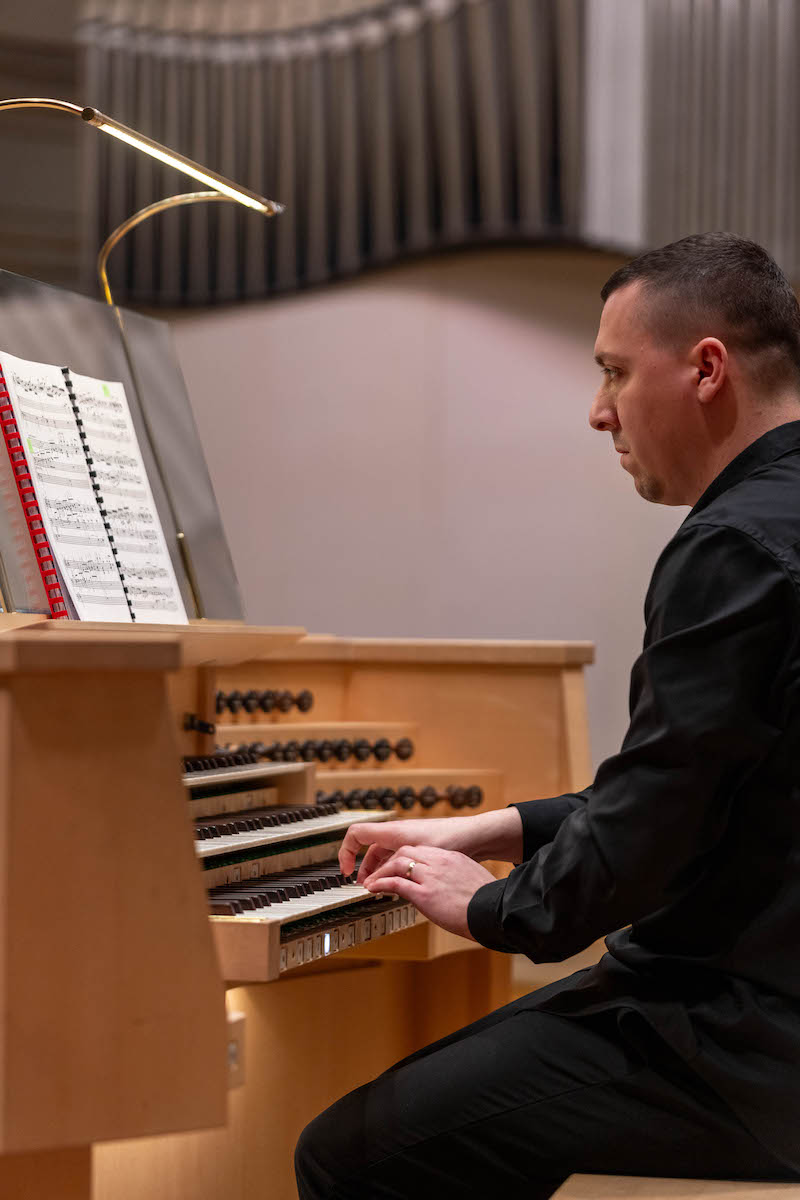
Daniel Gabčo studied organ performance at the Academy of Performing Arts in Bratislava with Prof. Ján Vladimír Michalko, ArtD., and Assoc. Prof. Imrich Szabó, ArtD., while also studying piano with Prof. Daniel Buranovský, ArtD. He is currently pursuing doctoral studies at the Faculty of Music of the Academy of Arts in Banská Bystrica.
During his studies he attended masterclasses with internationally renowned organists and musicians, including Olivier Latry, Jean Guillou, Thierry Escaich and Vincent Warnier. He performs regularly throughout Slovakia as well as in the Czech Republic, Austria, Germany and Italy.
Since 2014 he has collaborated regularly with the Slovak Philharmonic Orchestra, the Slovak Chamber Orchestra, the Žilina State Chamber Orchestra and the State Philharmonic Košice. He has performed under internationally acclaimed conductors including James Conlon, Alexander Rahbari, James Judd, Daniel Raiskin, Emmanuel Villaume and Juraj Valčuha.
He has premiered numerous works by Slovak composers, including Ľubomír Gabčo’s Incendium fantasticus for piano and orchestra, Scherzo for organ and trombone, Missa “Sanctae Dei Genetricis Mariae”, and Richard Krška’s Psalm 50 for tenor, male choir, two mixed choirs, organ and orchestra.
Since 2014 he has served as Principal Organist of St. Martin’s Cathedral in Bratislava, where he performs at major ecclesiastical and state ceremonies. These include the visit of Pope Francis to Slovakia in 2021, the inauguration of the President of the Slovak Republic in 2024, and numerous important liturgical celebrations attended by the country’s highest church and state representatives and broadcast by TV LUX and Slovak Television and Radio.
In these events he regularly collaborates with leading Slovak ensembles and musicians, including the Slovak Philharmonic, the Slovak Radio Symphony Orchestra, the Slovak Chamber Orchestra and the Slovak Brass Quintet.
Daniel Gabčo is the founder and artistic director of the Vox Cantoris Choir based at St. Martin’s Cathedral in Bratislava. Alongside his active concert career and responsibility for the cathedral’s musical programming, he is actively involved in the development of sacred liturgical music in Slovakia. Since 2022 he has served as an expert member of the Music Section of the Liturgical Commission of the Conference of Bishops of Slovakia for the Bratislava Archdiocese.
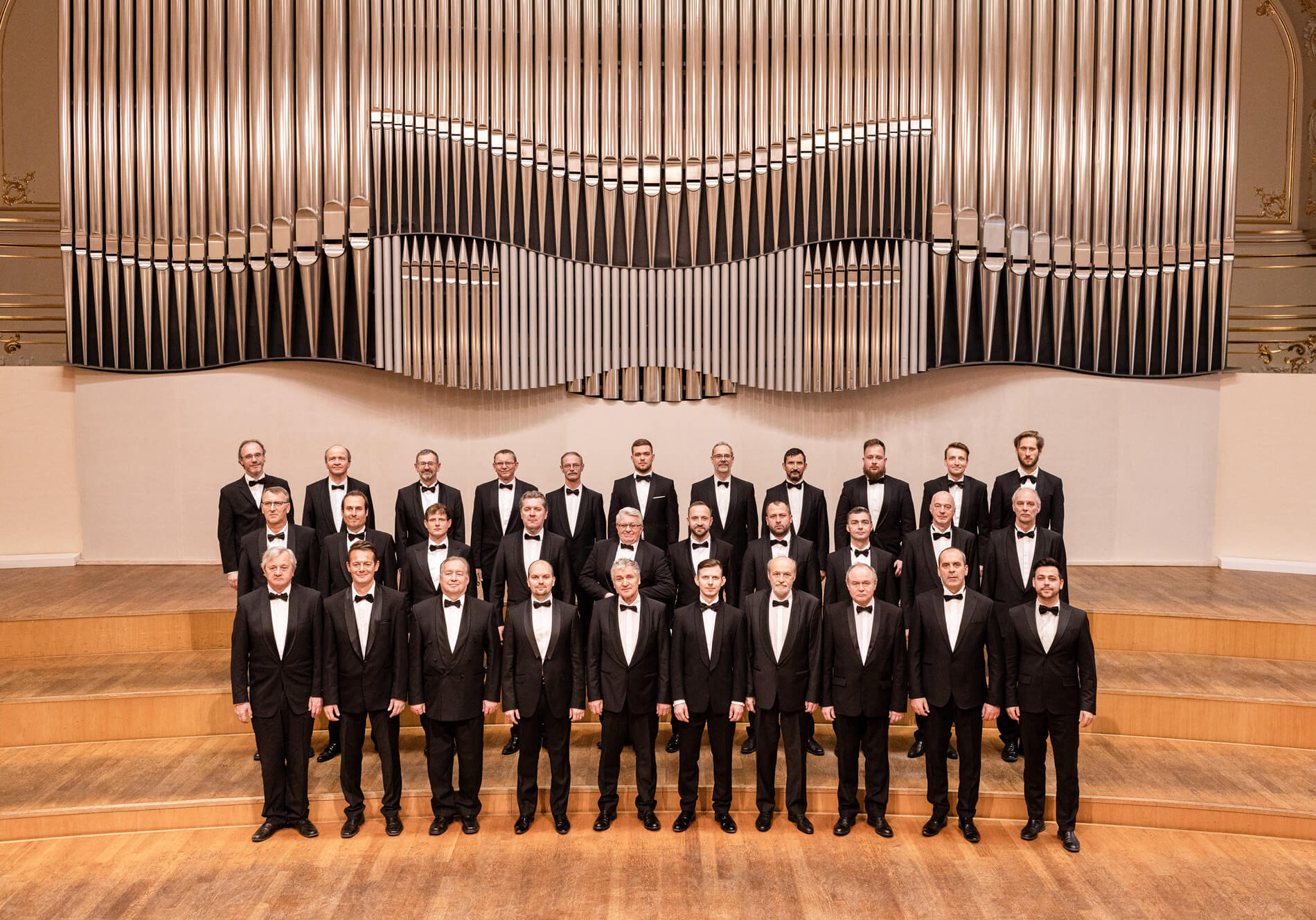
Slovak Philharmonic Choir
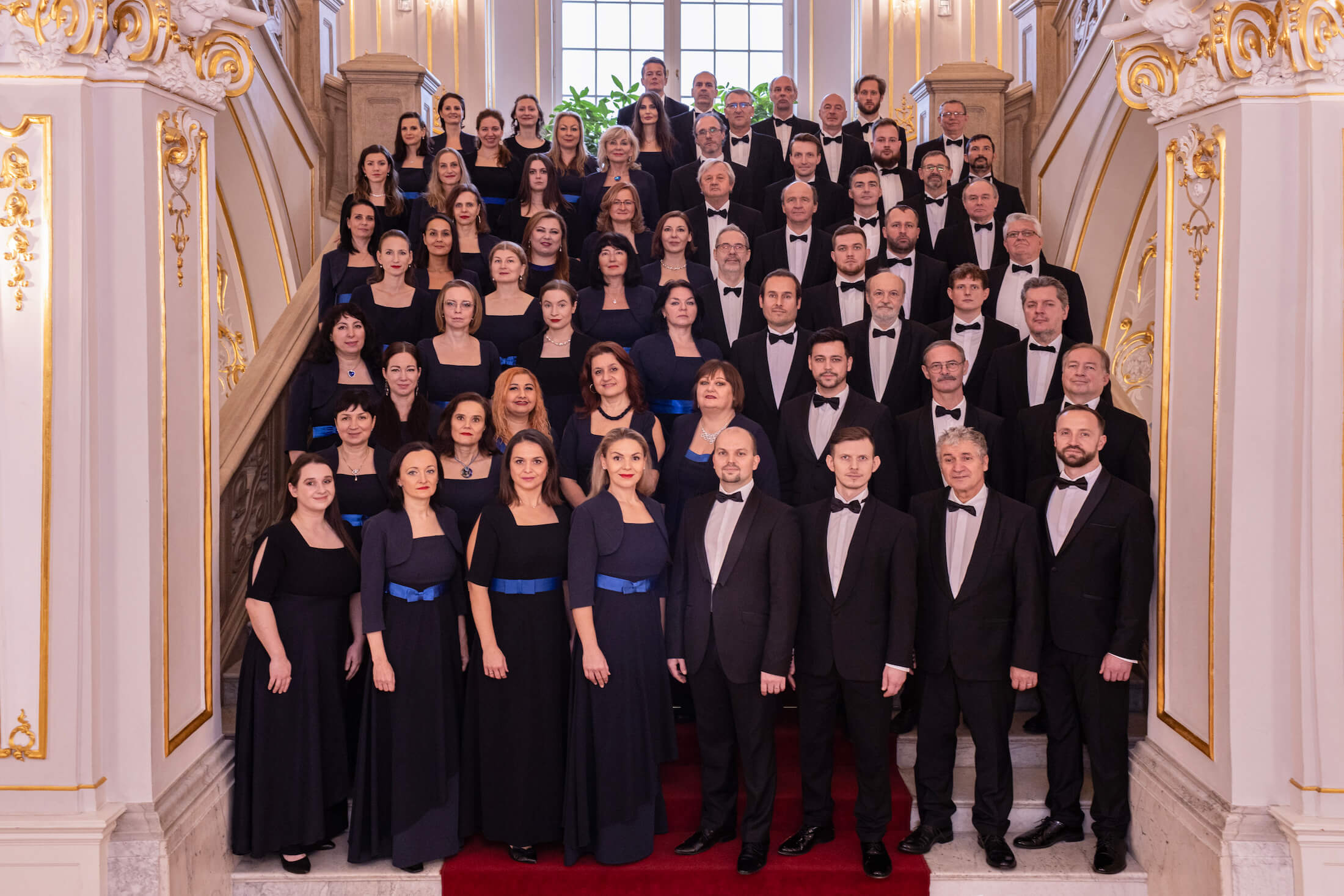
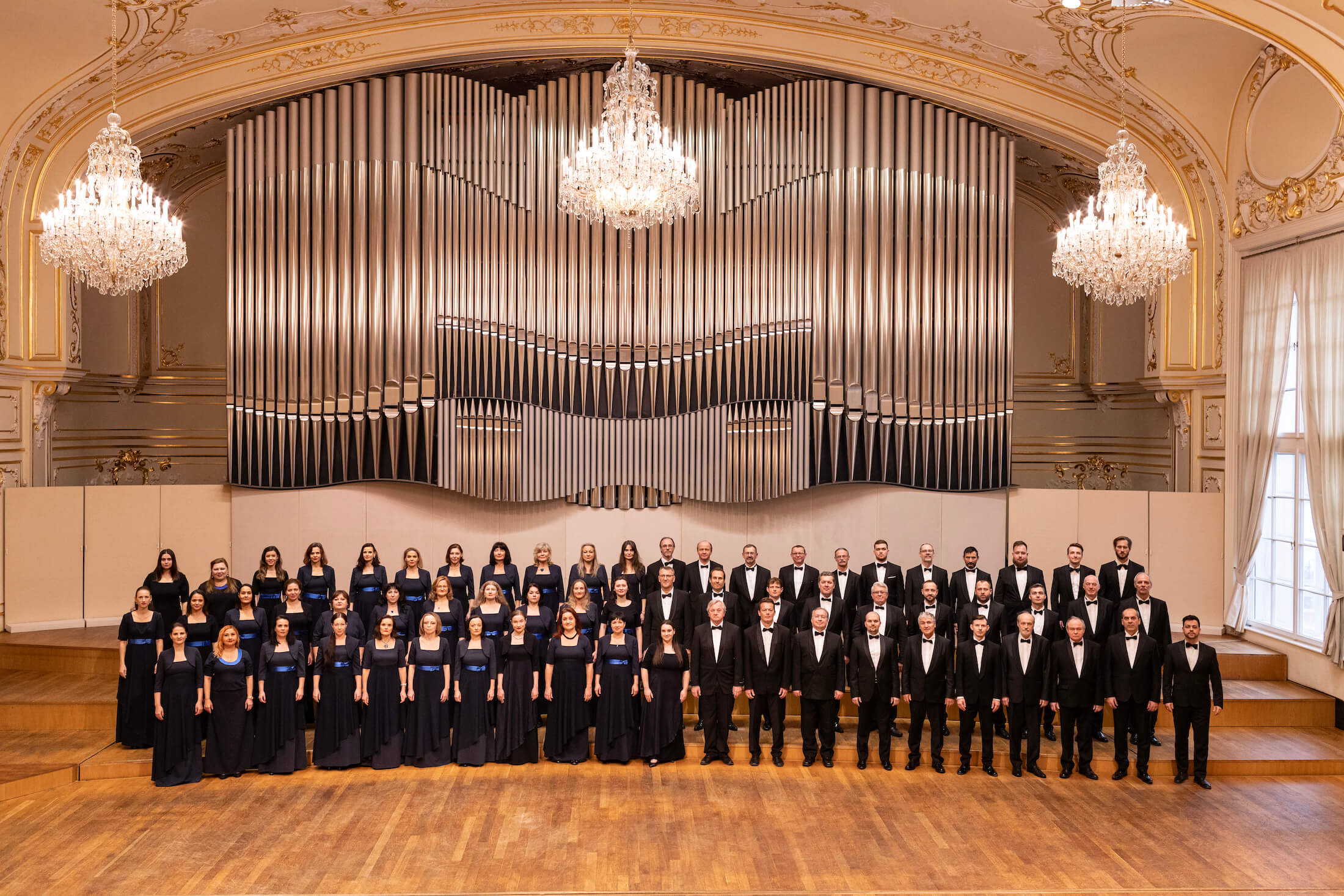
The Slovak Philharmonic Choir is one of the foremost representatives of Slovakia’s professional choral tradition. It was founded in 1946 as the Mixed Choir of Czechoslovak Radio and was led during its formative years by its founder and first conductor, Ladislav Slovák. In 1957, the choir became part of the Slovak Philharmonic. Over the decades, the position of choir director has been held by several distinguished personalities, including Jan Maria Dobrodinský, Štefan Klimo, Pavel Baxa, Pavol Procházka, Marián Vach, Jan Rozehnal, Blanka Juhaňáková and Jozef Chabroň. Since the 2026/2027 season, Petra Torkošová has served as the choir’s principal chorus master.
The choir is renowned for its refined sound, excellent balance between voice sections, artistic flexibility, reliability and exceptional musical discipline. These qualities have earned the admiration of many of the world’s leading conductors, including Claudio Abbado, Serge Baudo, Bertrand de Billy, Semyon Bychkov, Jean-Claude Casadesus, James Conlon, Dean Dixon, Christoph von Dohnányi, Vladimir Fedoseyev, János Ferencsik, Daniele Gatti, Pedro Halffter, Riccardo Chailly, Dmitri Kitayenko, Zdeněk Košler, Ondrej Lenárd, Alain Lombard, Fabio Luisi, Lorin Maazel, Kurt Masur, Zubin Mehta, Franz Welser-Möst, Antonio Pedrotti, Libor Pešek, Kirill Petrenko, Daniel Raiskin, Ľudovít Rajter, Helmuth Rilling, Karl Richter, Esa-Pekka Salonen, Peter Schreier, Pinchas Steinberg, Hans Swarowsky, Václav Talich, Emmanuel Villaume and Ralf Weikert.
The Slovak Philharmonic Choir has collaborated with many of the world’s leading orchestras, including the Berlin Philharmonic, the Vienna Philharmonic, the Vienna Symphony Orchestra, the Israel Philharmonic Orchestra and the Orchestre de Paris. It has also appeared at prestigious international festivals, including Salzburg, London and Baden-Baden.
Its extensive discography includes recordings for Slovak and international radio and television broadcasters as well as major recording labels.
In 2023, the Slovak Philharmonic Choir received the international Oper! Awards in the category Best Choir for its collaboration with the Berlin Philharmonic and Kirill Petrenko in Tchaikovsky’s The Queen of Spades, presented at the Baden-Baden Easter Festival and in concerts at the Berlin Philharmonie in 2022.
During the past three seasons, the choir has collaborated with leading European orchestras including the Tonkünstler Orchestra of Lower Austria, the Vienna Symphony Orchestra, the Hamburg Symphony Orchestra, the Dresden Philharmonic, the Prague Symphony Orchestra (FOK) and the Brno Philharmonic. Together they have performed major choral-orchestral masterpieces such as Mahler’s Symphony No. 8, Schoenberg’s Gurre-Lieder, Berlioz’s Roméo et Juliette, Beethoven’s Symphony No. 9 and Handel’s Messiah.
In April 2025, the choir appeared with great success at the Salzburg Easter Festival in a new production of Mussorgsky’s Khovanshchina with the Finnish Radio Symphony Orchestra under Esa-Pekka Salonen. In March 2026, it returned to the Vienna State Opera for a revival of Ligeti’s Le Grand Macabre with the Orchestra of the Vienna State Opera conducted by Pablo Heras-Casado.
The 2026/2027 season will include performances both in Slovakia and abroad, with guest appearances in Germany, Austria and the Czech Republic. At the beginning of the season, the choir will perform in Merseburg, presenting Franz Schmidt’s oratorio The Book with Seven Seals under the baton of Jörg-Peter Weigle.
At the end of 2026, the choir will return to the Vienna State Opera for a new production of Berlioz’s The Damnation of Faust, conducted by Bertrand de Billy.
Later in the 2026/2027 concert season, the Slovak Philharmonic Choir will once again perform Beethoven’s Symphony No. 9 at festivals in Košice and Ostrava. This will be followed by subscription concerts with the Prague Symphony Orchestra (FOK), featuring the world premiere of Ľubica Čekovská’s oratorio St. Adalbert alongside Dvořák’s Te Deum, conducted by Tomáš Netopil. A reprise of Čekovská’s new work will also be presented at the Smetana Litomyšl Festival and the Bratislava Music Festival (BHS) in 2027.
In August 2027, the choir will join the Czech Philharmonic for a concert performance of Dvořák’s Rusalka at the Grafenegg Festival under the direction of Semyon Bychkov.